When the furnace will not stay on
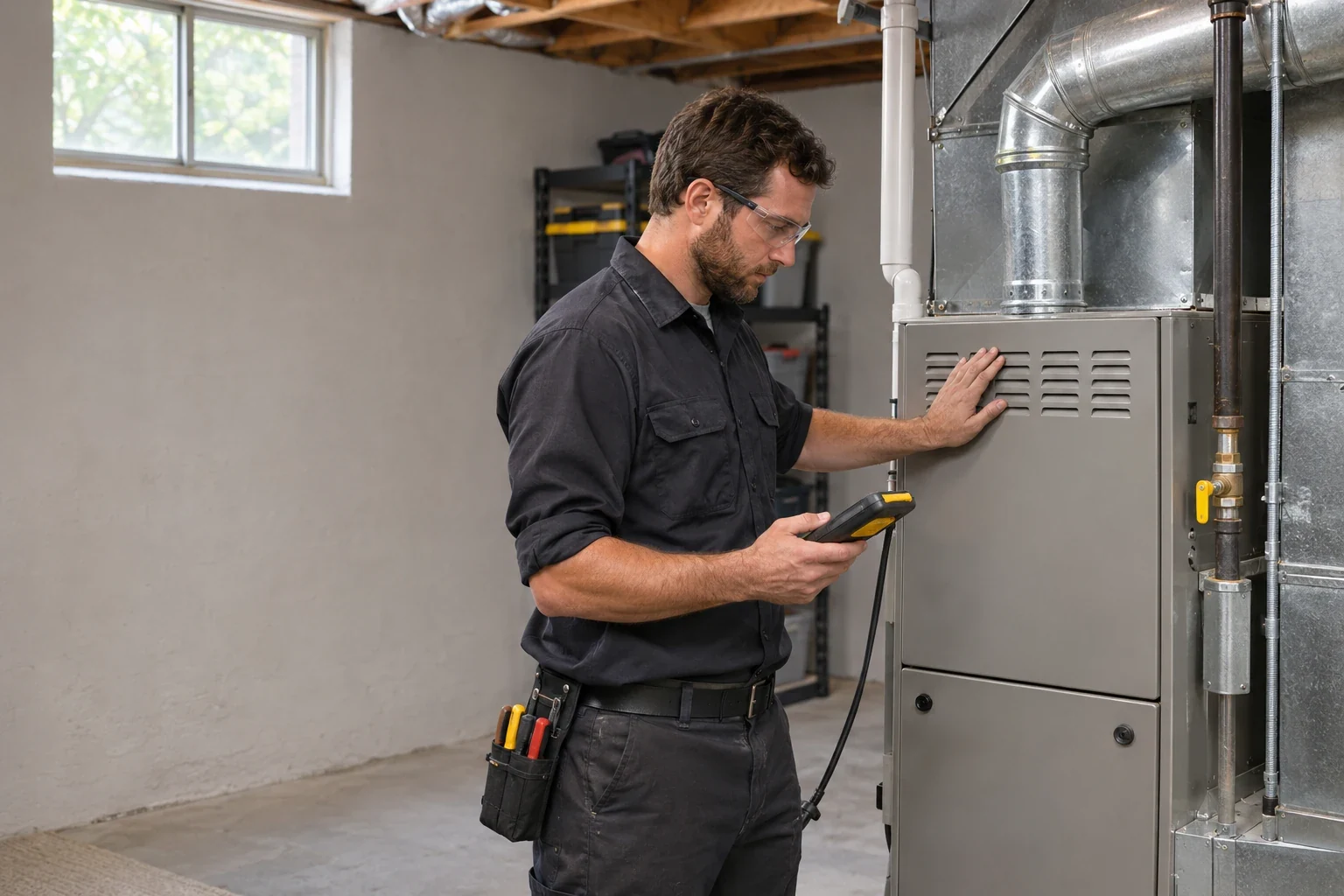
A gas furnace must complete a controlled sequence: a call for heat, safe venting, ignition, flame confirmation and blower operation. A failure at one point can stop the whole cycle. An electric furnace instead heats air with resistance elements and uses relays or sequencers to control them; its diagnosis follows those components and the blower. We help with burners that do not light, heat that stops after a short run and blowers that do not move warm air through the home.
Find the cause before replacing a part
Ignitors, flame sensors, motors, switches and control boards have different jobs. The apparent symptom does not identify a single failed part. The assessment includes the operating sequence, electrical supply, air movement and safety controls relevant to the fault.
Airflow, venting and the connected AC
The furnace blower may also serve the air-conditioning coil. A restrictive filter, duct problem or dirty indoor coil can affect heat delivery. Combustion and vent connections need attention on fuel-burning systems. A repair must preserve the safety functions designed into the equipment.
Repair cost and replacement choices
A small ignition fault and a failed heat exchanger have very different costs and implications. Compare the repair scope, warranty coverage and overall equipment condition rather than using age alone. Our furnace repair cost guide explains typical component budgets; the replacement guide covers new-equipment planning.